Home Page
AVDL News
Policies and Procedures Tests and Specimens Area Labs Submission  Forms Links Employment Information Contact Us


Virology and Molecular Detection

Virology and molecular detection tests are provided only at the Auburn laboratory. The Virology and Molecular section consists of two separate laboratories.

The Virology Laboratory provides services included detection and identification of viral pathogens and antibodies from animal tissues, serum, body fluids, and feces. Tests include virus isolation (cell culture and egg inoculation), fluorescent antibody (FA) test, and antigen capture ELISA, and electron microscopy (EM). These tests detect viruses by visible damage to cells or chicken embryos in culture system, or detect the presence of virus antigens or antibodies.

The Molecular Detection laboratory provides polymerase chain reaction (PCR), reverse transcription PCR (RT-PCR), real-time Reverse Transcription PCR (RRT-PCR), and Restriction Fragment Length Polymorphism (RFLP) assay. The detected pathogen includes animal virus, bacteria, and parasites.   

PCR is the method for amplifying specific DNA segments which exploits certain features of DNA replication. For instance replication requires a primer and specificity is determined by the sequence and size of the primer.RT-PCR is a method of polymerase-chain-reaction amplification of nucleic acid sequences that uses RNA as the template for transcribing the corresponding DNA using reverse transcriptase. PCR, RT-PCR and RRT-PCR procedures identify agent specific DNA or RNA from animal tissue, serum, cell culture, feces. RFLP assay can be used for virus subtype or bacteria species differentiation detected by the presence of fragments of different lengths after digestion of the DNA samples with specific restriction endonucleases.

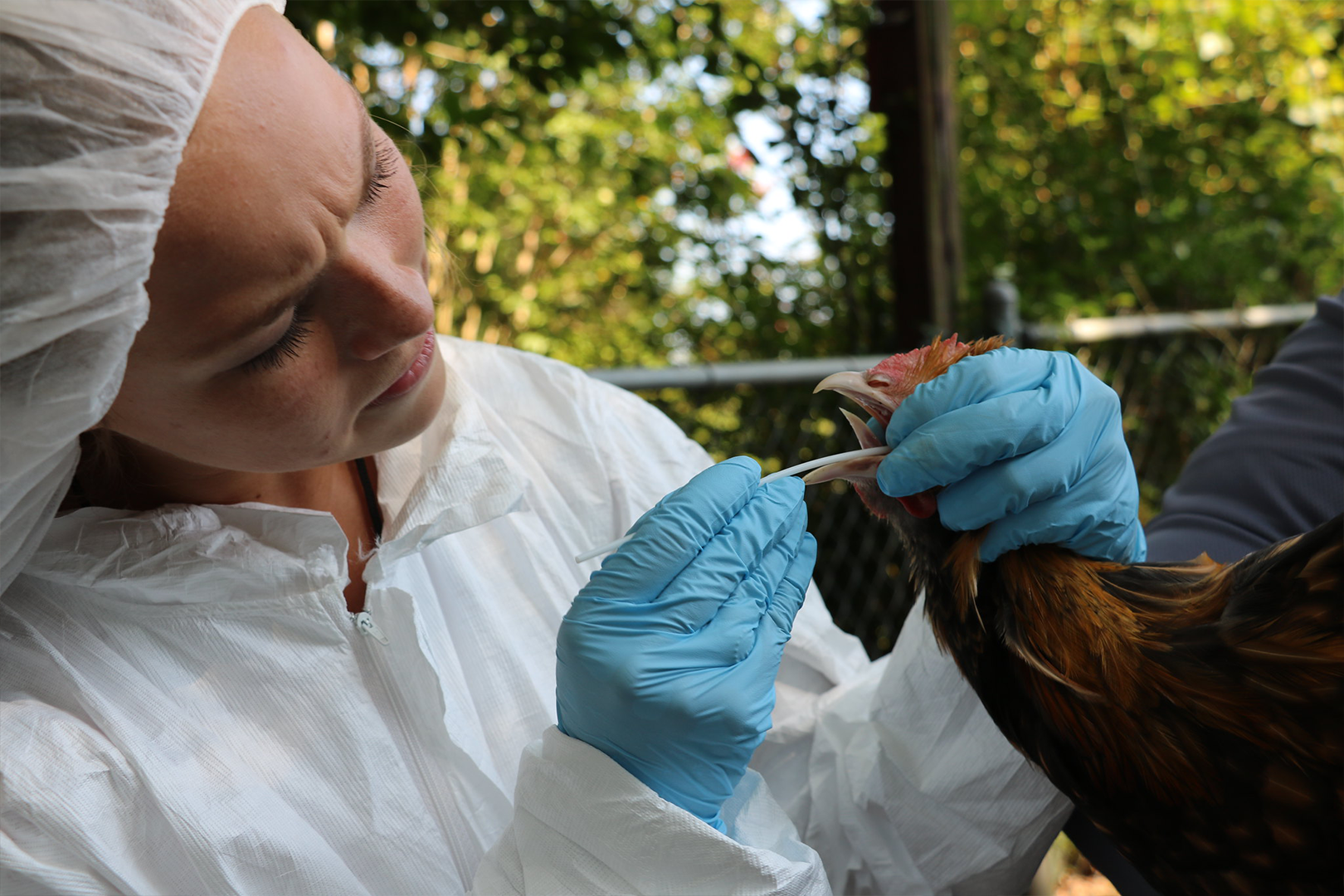
The Molecular detection of TBSSL participates in national disease surveillance programs to screen animal population for highly pathogenic avian influenza and exotic Newcastle disease.

Diagnostic Virology and Molecular Detection Specimen Submissions

  • Collect specimens aseptically during the early stages of infection.
  • In cases involving flock or herd problems, specimens should be collected from 5 or 6 animals at various stages of the disease.
  • Choose appropriate specimens by referring to the chart provided in this User's Guide or call the lab for suggestions.
  • Most of the viruses are extremely heat-labile and are inactivated within minutes at 600 C and within hours at 370C. Specimens should be refrigerated immediately after collection and hand carried or express-mailed to ensure that they reach the laboratory under refrigerated conditions.
  • If a delay of more than 24 hours is expected between specimen collection and submission to the laboratory, specimens should be packed in individual plastic bags and frozen immediately. If dry ice is used, samples must be sealed in airtight containers to prevent exposure of viruses to CO2.
  • High-impact Styrofoam boxes make good containers for mailing frozen specimens. Sufficient refrigerant must be added to maintain tissues in frozen condition until received by the laboratory. Refer to Shipping instructions elsewhere in this website.
  • Accurate interpretation of viral serology depends on animal and herd history, type and date of vaccinations and comparisons of acute and convalescent titers. Provide as much information as possible.
  • Serum or virus neutralization tests are used for some viral serological tests. Any microbial or chemical contamination of the sera can cause toxicity to the cells. Clear serum in sterile tubes held under refrigerated conditions should be submitted.
  • Mail samples to the laboratory in the early part of the week so that specimens do not overhead during transport delays over the weekend.
  • The laboratory reserves the right to determine the suitability of a specimen for testing as well as recommending appropriate tests depending on the case history.
  • Viral transport media, brain heart infusion broth (Avian influenza and Newcastle disease testing) and PBS solution (BVD - ear notch testing) are available from the lab. Please contact the lab for freshly prepared media.
  • To expedite sample processing contact the virology section prior to submitting large numbers (>10) of samples for virus isolation.
  • PCR specimens: Submit all samples as quickly as possible and keep them chilled during transport to the lab for best results.


Login
Make Page Printable
Last Modified: 7/23/2009